/59748.tmb-300v.png?sfvrsn=9885965b_2 "For the future - publication thumbnail")



Diabetes
Diabetes is a long-term disease that is due to the poorly controlled level of sugar (glucose) in the bloodstream either because of the low production of the hormone insulin or problems in its use. Poor control of blood sugar leads to damage in many parts of the body – and can result into blindness, kidney failure, heart attacks and leg amputations.
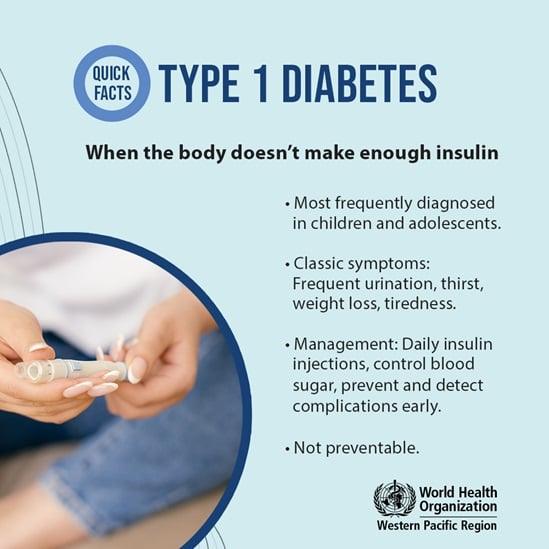
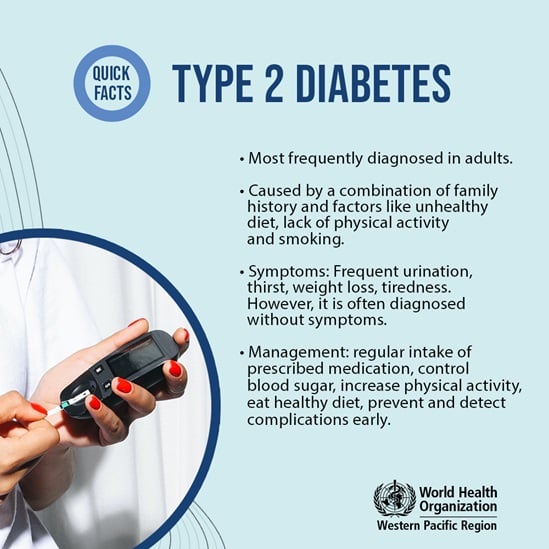
The most common is type 2 diabetes, usually in adults, which occurs when the body has difficulty using insulin or doesn't make enough insulin. Type 1 diabetes, once known as juvenile diabetes or insulin-dependent diabetes, is a chronic condition in which the pancreas produces little or no insulin by itself.
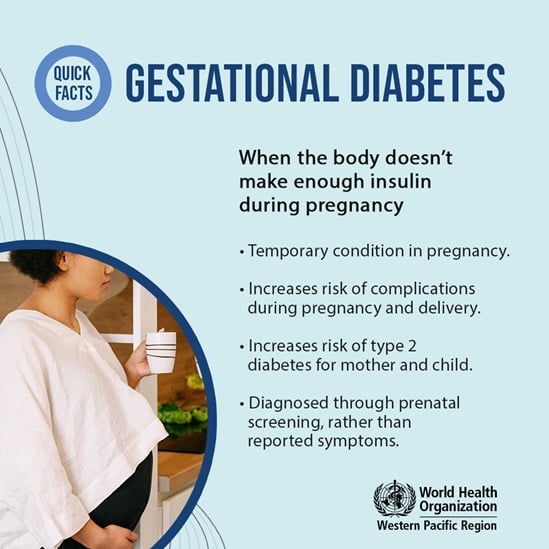
Gestational diabetes is a condition during pregnancy when the blood sugar level of the mother is above the normal level but below the level used to make a diagnosis of diabetes.
Diabetes is one of the four major noncommunicable diseases (NCDs) and its global prevalence has been steadily increasing in recent years. In the Western Pacific Region:
- More than 220 million adults aged 18 years and above were estimated to have the disease in 2022, a fourfold increase compared to 51 million in 1990 and more than a fourth of cases worldwide1
- Only half of people with diabetes know that they have the disease2 and less than half receive treatment3
12022 estimates for Diabetes, prevalence (%) from the WHO Global Health Observatory
22024 estimates from the IDF Diabetes Atlas 2025 | Global Diabetes Data & Insights
32022 estimates for Diabetes treatment coverage from the WHO Global Health Observatory
Symptoms of type 1 diabetes include the need to urinate often, frequent thirst, constant hunger, weight loss, vision changes and fatigue. These symptoms may occur suddenly.
Symptoms for type 2 diabetes are generally similar to those of type 1 diabetes, but are often less severe in the early stages of the disease. As a result, it may be diagnosed several years after onset, and often after complications have already arisen. For this reason, it is important to be aware of the risk factors for type 2 diabetes.
Gestational diabetes is diagnosed through prenatal screening, rather than through reported symptoms.
The longer a person lives with undiagnosed and untreated diabetes, the worse their health outcomes are likely to be. Early diagnosis can be accomplished through relatively inexpensive testing of blood sugar.
Type 1 diabetes cannot currently be prevented. Effective approaches are available to prevent type 2 diabetes and to prevent the complications and premature death that can result from all types of diabetes.
Simple lifestyle measures have been shown to be effective in preventing or delaying the onset of type 2 diabetes. To help prevent and delay the onset of type 2 diabetes and its complications, people should achieve and maintain a healthy body weight, be physically active, eat a healthy diet that limits sugars and saturated fats, and avoid tobacco use.
People with type 1 diabetes require blood glucose control and daily insulin injections. People with type 2 diabetes can be treated with oral medication, but may also require insulin. Blood pressure and cholesterol control, foot care, and treatment of other complications, including screening and treatment for retinopathy, are also important.